September has a way of sneaking up on business owners. Summer winds down, schedules fill back up, and suddenly year-end is only a quarter away.
The businesses that sail through January are almost always the ones that did the unglamorous prep work in September and October — not the ones scrambling in December.
Here’s what’s worth handling now, while there’s still breathing room.
1. Clean Up Employee Records Before Year-End
W-2 season goes badly when employee data is wrong, and it’s almost always the same handful of issues.
- Social Security numbers and legal names: A single wrong digit means a rejected filing and a correction later.
- Mailing addresses: People move over the summer. Confirm every address on file is still current.
- Terminations: Make sure terminated employees are properly closed out in your system, with final pay documented.
2. Reconcile Payroll Quarter by Quarter
Waiting until December to catch a payroll discrepancy is how small errors turn into amended filings.
- Compare your quarterly filings against your payroll register for Q1 through Q3.
- Verify that Hawaiʻi state withholding, unemployment insurance, and Temporary Disability Insurance amounts all tie out.
- Flag any manual checks, bonuses, or off-cycle payments that may not have been recorded properly.
3. Review Bonus and Year-End Pay Plans Early
If you’re planning holiday bonuses, decide the structure now — not the week before you pay them.
- Tax treatment: Bonuses are supplemental wages and have their own withholding treatment.
- Overtime impact: Non-discretionary bonuses may need to be factored into overtime calculations for non-exempt staff.
- Cash flow timing: Confirm the business can comfortably absorb the payout alongside normal Q4 expenses.
4. Get Ahead of Holiday Scheduling
Hawaiʻi businesses often run lean through the holidays while demand stays high — especially in hospitality and retail.
- Set a PTO request deadline for the holidays so you’re not resolving conflicts in mid-December.
- Clarify in writing which days are paid holidays and how holiday pay is calculated.
- If you’ll need seasonal hires, start onboarding paperwork now rather than in November.
5. Confirm Retirement Plan Compliance
With the Hawaiʻi Retirement Savings Program in effect, Q4 is the checkpoint you don’t want to miss.
- Contribution accuracy: Verify contributions have been withheld and remitted correctly all year.
- New hire enrollment: Make sure anyone hired this year was enrolled or offered enrollment on schedule.
- Documentation: Keep records of employee elections and opt-outs on file.
6. Update Your HR Calendar for 2027
Before Q4 swallows your attention, block out the dates that matter next year.
- Payroll processing dates that fall near holidays or bank closures.
- Benefits open enrollment windows.
- Performance review cycles and any scheduled wage adjustments.
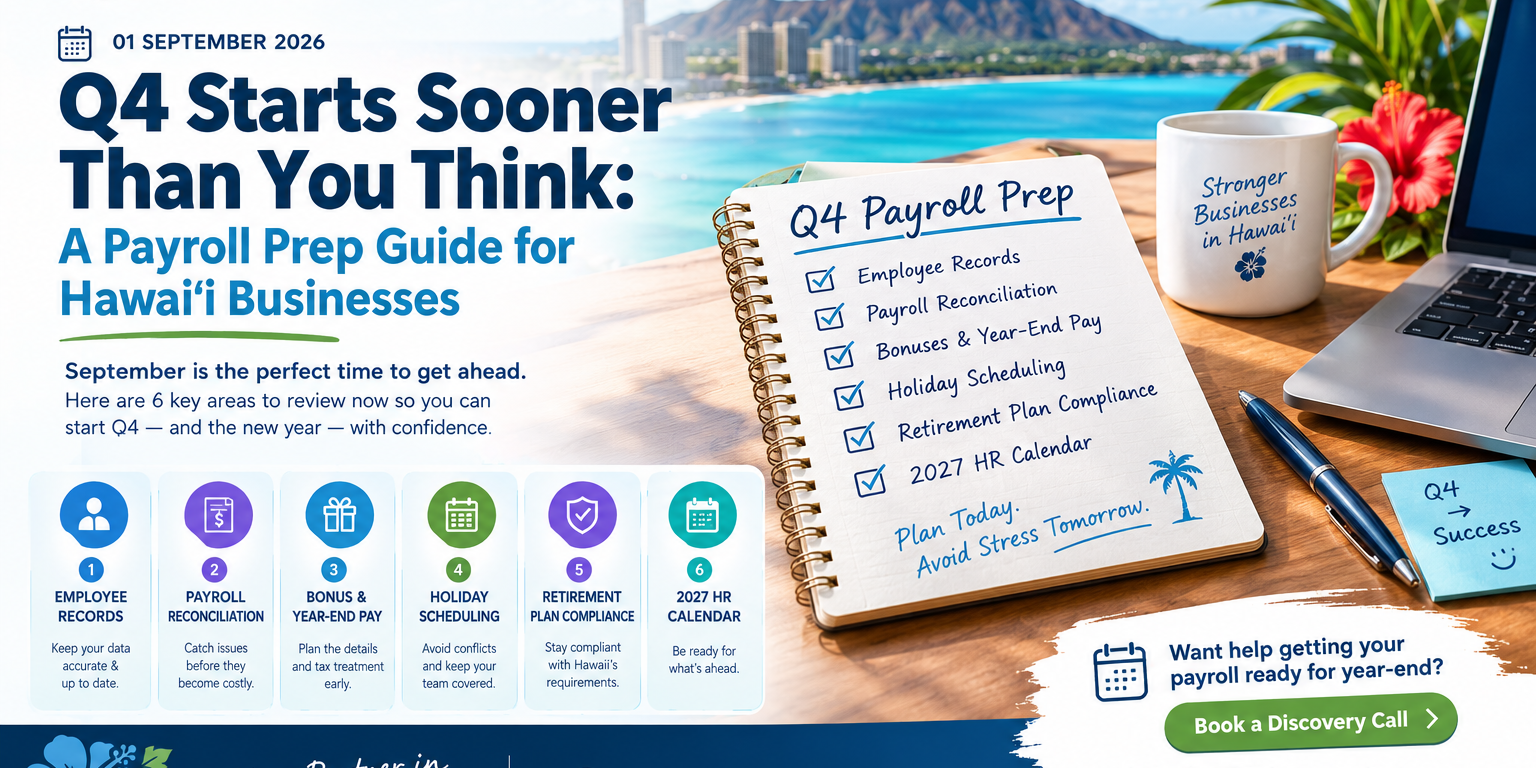
A Simple Q4 Prep Checklist
- Employee records verified (names, SSNs, addresses)
- Q1–Q3 payroll reconciled against filings
- Bonus structure and tax treatment decided
- Holiday schedule and PTO deadlines communicated
- Retirement plan contributions and enrollments confirmed
- 2027 HR calendar drafted
Why September Is the Right Time
Every item on this list is easier in September than in December. Records are fresher, your team has more bandwidth, and there’s still time to fix anything that turns up.
Year-end doesn’t have to be stressful — it just has to be planned for.
Want help getting your payroll ready for year-end?