We’re halfway through 2026 — which makes this the perfect moment for Hawaiʻi small business owners to pause and take stock.
Payroll runs. Deadlines get met. But HR has a way of quietly drifting out of date when you’re focused on keeping the business moving.
A mid-year checkup doesn’t need to be a big project. It just means looking at a few key areas before small gaps turn into real problems in the second half of the year.
Here’s where to start.
1. Revisit Your Employee Handbook
Laws change, teams grow, and policies that made sense in January can quietly go stale by July.
- Check for updates: Confirm your handbook reflects any new state or federal requirements from earlier this year.
- Confirm acknowledgment: Make sure new hires since January have actually acknowledged receiving it.
- Review policies against reality: If your team has grown, benefits, PTO, or scheduling language may need adjusting.
2. Audit Employee Classifications
Misclassifying an employee as exempt, non-exempt, or an independent contractor is one of the most common — and costly — HR mistakes.
- For salaried staff: Are they performing exempt-level duties, or has the role changed since they were hired?
- For contractors: Confirm the working relationship still meets Hawaiʻi and federal guidelines for contractor status.
- Why it matters: Wage claims and back-pay issues get more expensive the longer a misclassification goes unnoticed.
3. Check In on Overtime and Wage Compliance
With Hawaiʻi’s minimum wage increases continuing on schedule, mid-year is a good time to confirm your pay practices are still lined up correctly.
- Wage floors: Confirm every role is paying at or above the current Hawaiʻi minimum wage.
- Overtime tracking: Spot-check timesheets to ensure overtime is being calculated and paid correctly.
- Upcoming increases: If pay adjustments are due, plan for them now rather than scrambling later in the year.
4. Review PTO and Leave Balances
By mid-year, PTO patterns start to tell a story — some employees have used almost none, others are already running low.
- Flag employees with unusually high or low PTO balances before year-end pressure builds.
- Make sure any state-mandated leave (like Temporary Disability Insurance) is being tracked accurately.
- If your policy allows rollover or caps, remind staff of the details now, not in December.
5. Revisit Job Descriptions
Roles evolve. A job description that hasn’t been touched since hiring often no longer reflects what someone actually does day to day.
- Outdated job descriptions can weaken your position if a performance or classification issue ever comes up.
- They’re also a quick way to catch scope creep before it turns into burnout or a pay conversation you weren’t ready for.
6. Confirm Your Retirement and Benefits Readiness
With the Hawaiʻi Retirement Savings Program rolling out this year, mid-year is a smart checkpoint to confirm where your business stands.
- Do you have a qualifying plan? If you already offer one, make sure it’s current and properly documented.
- If not: If not, decide whether you’re adopting a plan or preparing to participate in the state program.
- Payroll readiness: Payroll systems need to be ready to withhold and remit contributions when required.
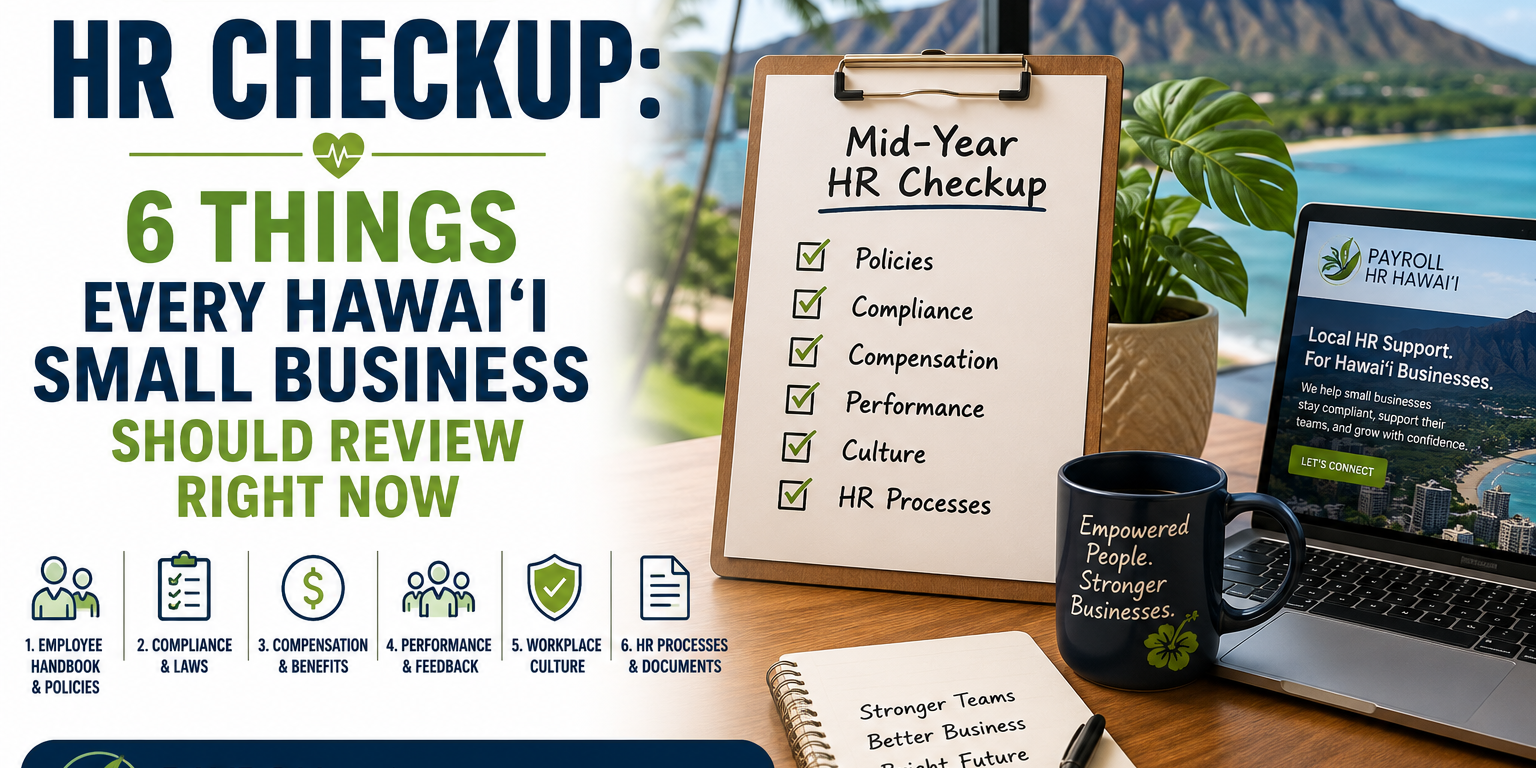
A Simple Mid-Year Checklist
- Handbook reviewed and acknowledgments collected
- Employee classifications double-checked
- Wage and overtime practices confirmed against current law
- PTO balances reviewed for outliers
- Job descriptions updated to match real responsibilities
- Retirement plan status confirmed
Why This Small Effort Pays Off
None of these six items take long on their own. Together, they can prevent the kind of compliance surprise that costs far more time and money to fix after the fact.
A mid-year checkup isn’t about perfection — it’s about catching small things while they’re still small.
That’s the difference between reacting to HR problems and staying ahead of them.
Want a second set of eyes on your HR setup?
A relaxed, no-obligation conversation to see whether having PayrollHR Hawaii in your corner makes sense for your business.