Hawaiʻi’s hurricane season runs through November, and August is typically when activity picks up across the Pacific.
Most small businesses have a plan for boarding up windows or stocking supplies. Far fewer have thought through what happens to payroll, pay obligations, and their team if a storm actually forces a closure.
A little HR preparation now can save a lot of confusion — and possible compliance missteps — later. Here’s what to have in place before the season ramps up.
1. Know Your Pay Obligations During a Closure
Whether employees must be paid during a storm-related closure depends heavily on their classification.
- Exempt employees: Generally must be paid their full salary for any week in which they perform any work, even if the office closes for part of the week.
- Non-exempt employees: Only need to be paid for hours actually worked, unless your own policy says otherwise.
- Remote work exception: If you plan to require remote work during a closure, confirm hourly staff are actually clocking that time correctly.
2. Put Your Closure Policy in Writing
If your handbook doesn’t already address severe weather, this is a good month to add it.
- Decision authority: Who decides when to close, and how that decision gets communicated.
- Pay treatment: Whether closures are paid, unpaid, or covered by PTO.
- Communication channel: Text, email, or a group chat — pick one primary channel and make sure everyone is actually on it.
3. Confirm Contact Information Is Current
A written plan doesn’t help if you can’t actually reach your team when it matters.
- Emergency contact info, especially for anyone who has joined recently.
- Personal phone numbers and backup emails, in case work systems go down.
- Whether your payroll or HR platform has an emergency broadcast or alert feature you haven’t set up yet.
4. Plan for Payroll Continuity
Storms have a way of landing right around a pay date.
- Check processing deadlines: If your bank or payroll provider will be closed, know whether payroll needs to run a day early.
- Direct deposit coverage: If your team relies on paper checks, have a backup plan for delivery or direct deposit enrollment.
- Backup access: Confirm someone other than you can run payroll if you’re personally dealing with storm impact.
5. Revisit Leave and PTO Rules for Emergencies
Decide now — not mid-storm — how weather-related absences will be handled.
- Will employees be allowed to use PTO for a closure, or is it treated as a paid company closure?
- If someone can’t get to work because of storm damage or evacuation, is that treated differently than a routine absence?
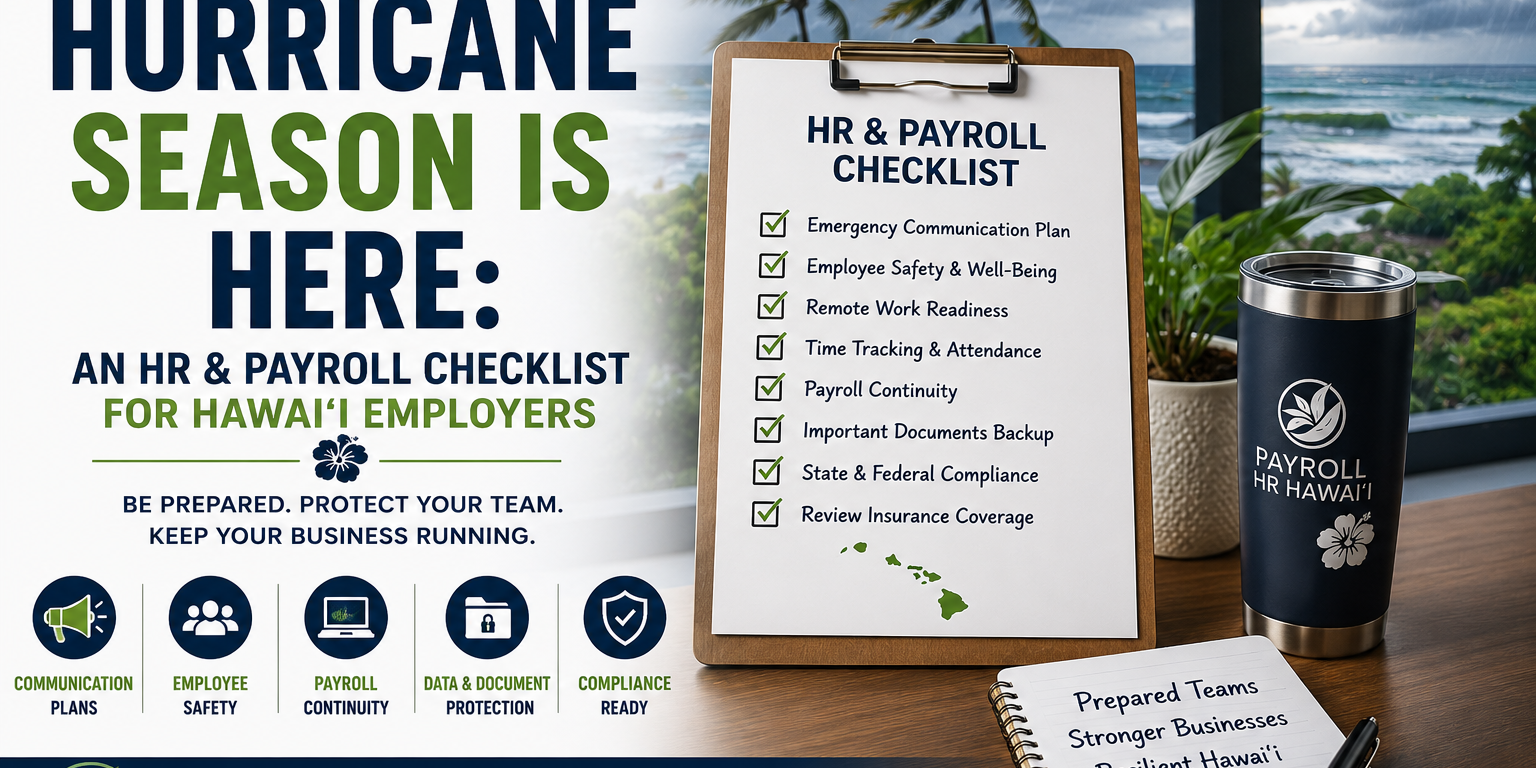
A Simple Hurricane-Season Checklist
- Closure and pay policy documented in the handbook
- Emergency contact list updated
- Payroll processing deadlines confirmed with your bank/provider
- Backup payroll access set up
- PTO and emergency leave rules clarified
- Primary communication channel confirmed with the whole team
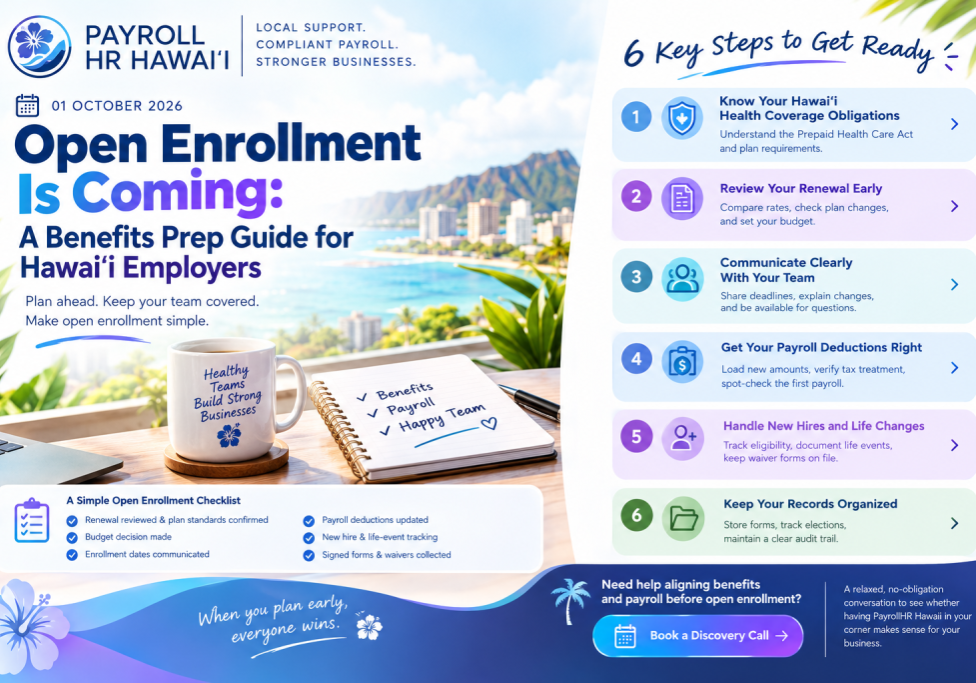
Preparation Now Means Fewer Headaches Later
None of this prevents a storm — but it does prevent the scramble that usually follows one: confused employees, missed pay dates, and decisions made on the fly under pressure.
A little planning in August is a lot easier than damage control in the middle of a storm.
Want help getting your closure and payroll policies in place?
A relaxed, no-obligation conversation to see whether having PayrollHR Hawaii in your corner makes sense for your business.